From Paper Forms to a 
Funding System Built to Scale

Introduction

The David Foster Foundation helps Canadian families cover essential expenses while their children undergo organ transplants. As demand for that support grew, the process behind it was reaching its limits.
Family support requests had increased by 45%. Every application still arrived on paper.

An operational model 
that couldn't scale

A single person managed the full intake process: reviewing forms, verifying information, manually transcribing application data into spreadsheets, assessing eligibility, organizing records, and keeping track of upcoming renewals. Operational effort scaled directly with volume. Critical knowledge was concentrated in one person.

Adding headcount, adopting new platforms, or bringing in off-the-shelf tools would introduce recurring costs and training burden that conflicted with a donor-funded model. The mandate was to increase throughput without increasing overhead.

Building around the systems already in place

Rather than introducing another platform, TTT designed the solution around the Microsoft environment the Foundation already used.

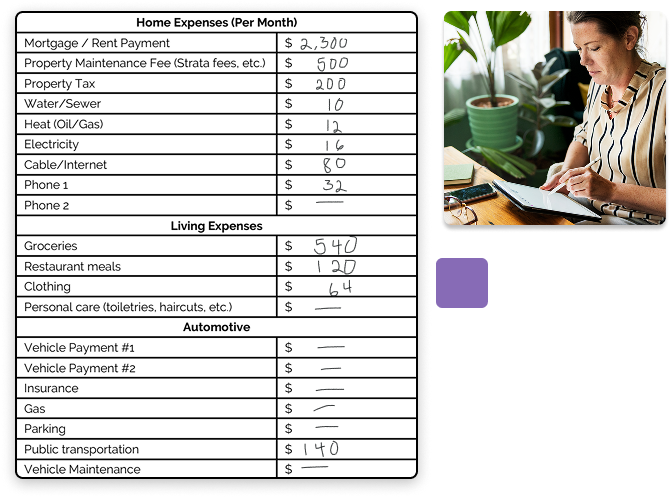
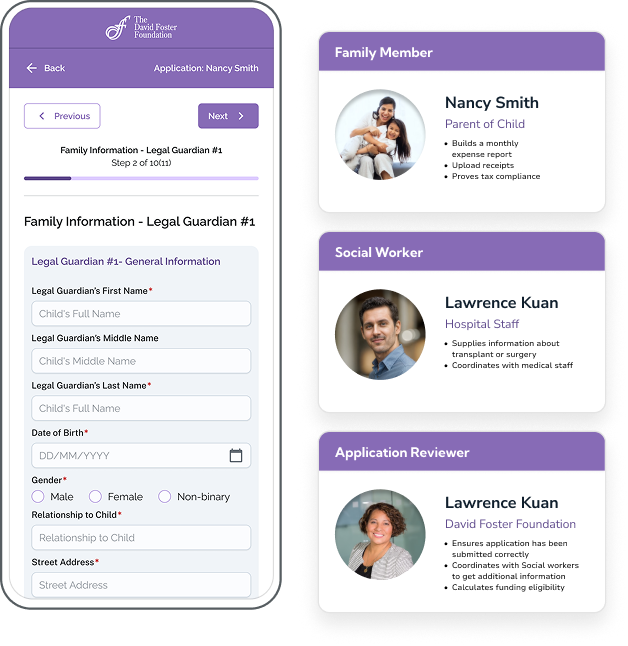
At the centre is a web portal that replaces the paper application with a shared digital intake experience designed for families and social workers already under pressure. Role-based access allowed each participant to interact with the same application through a single URL while seeing only the information and actions relevant to them.

Authentication is handled through time-restricted magic links, eliminating the need for families and social workers to create and manage accounts or passwords.
“We didn't have room to add headcount or learn a new platform. TTT really understood what our intake process needed. Removing the manual transcription alone has saved us a significant amount of time every week"
Aleea Dahinden
Director of Family Relations, David Foster Foundation
Targeted automations were built inside the Foundation's existing Microsoft ecosystem. When a family submits an application, the workflow creates an OneDrive folder, generates a standardized family file, and logs the submission automatically. Status changes propagate across all connected files. Renewal alerts notify staff before funding lapses. Manual fallbacks were retained across every automated step.

The Foundation now handles a significantly higher volume of applications with the same team size. Manual transcription was removed from intake. The board has direct visibility into funding status across the active family portfolio. No new platforms were introduced and no vendor dependency was created.